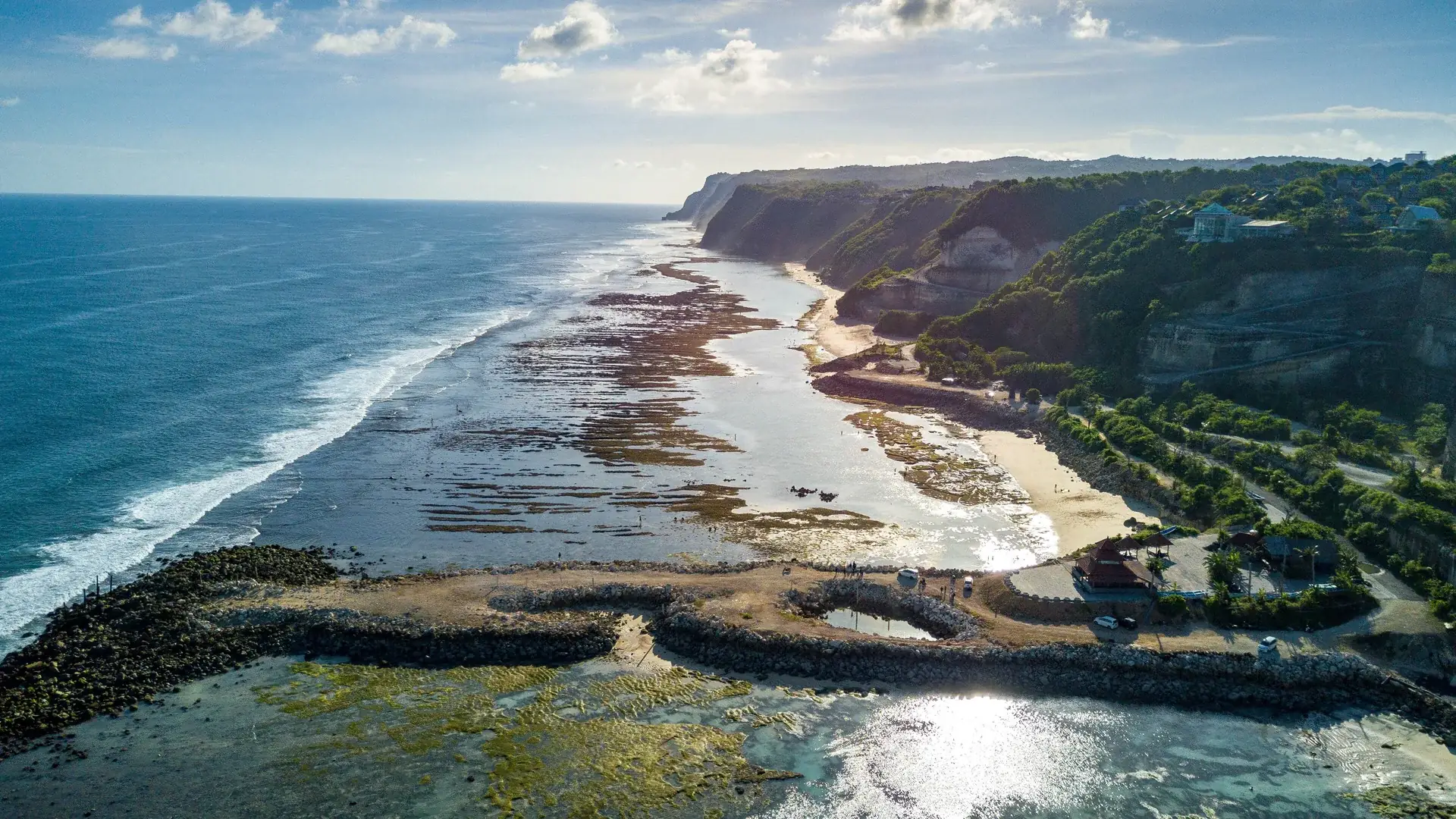
The kecak has roots in sanghyang, sacred Balinese trance dances in which a spirit is believed to enter the performer. The kecak itself began as a trance ritual accompanied by a male chorus. That chorus, chanting in interlocking rhythms with no gamelan behind it, is the heart of what you hear on the beach.
Answer first
Is the Melasti Beach kecak worth it, and what do you actually see in the hour?
The short answer
Yes, for anyone staying in south Bali who wants the kecak in its most scenic form without a half-day tour. For about an hour a ring of men chants "cak" while costumed dancers act scenes from the Ramayana, ending in fire, with the sun going down behind the cliffs of Melasti Beach. Three things to know before you book: the beach entrance fee and parking are paid at the gate, there are stairs down to the show area, and the ticket cannot be cancelled, changed or refunded.
What it is
A sunset performance of the kecak, Bali's chanted dance drama, staged on Melasti Beach in Ungasan on the Bukit Peninsula. You make your own way there, pay at the gate, take the stairs down and sit on unnumbered benches. Children under ten go free; bring insect repellent, because dusk by the sea brings mosquitoes.
What it isn't
It isn't a temple ceremony, a tour with transport or a dinner show: you get the performance and nothing around it. It isn't the clifftop kecak at Uluwatu Temple, which is a separate show by a different company. And it isn't a flexible booking, so choose your evening before you pay.
The hour, briefly
- Length
- About one hour.
- On stage
- A male chorus, Ramayana scenes, fire.
- At the gate
- Beach entry and parking paid separately.
- Booking
- Non-refundable; under-tens go free.
The story in the circle
The Ramayana scenes a kecak draws on
No running order is printed here: which scenes the Melasti company stages, and in what order, is theirs to decide. These are the episodes a kecak usually tells, as Wikipedia's articles on the kecak and the Ramayana describe them, with the book of the epic each comes from.
-
Ayodhya Kanda
Exile
Rama, Sita and Lakshmana in the forest
Banished for fourteen years, Prince Rama goes into the wilderness with his wife Sita and his brother Lakshmana. In the kecak this is the quiet opening, the chorus becoming the forest around them.
-
Aranya Kanda
Lure
The golden deer
The demon Maricha takes the form of a golden deer to draw Rama away. Sita begs him to catch it, and the trap that the rest of the story turns on is set.
-
Aranya Kanda
Theft
Sita carried off by Ravana
With both brothers gone, the demon king Ravana arrives disguised as an ascetic and carries Sita away to his island city of Lanka.
-
Aranya Kanda
Sacrifice
Jatayu fights Ravana
The vulture Jatayu tries to rescue Sita and is mortally wounded, living just long enough to tell Rama what has happened.
-
Sundara Kanda
Search
Hanuman's leap to Lanka
The monkey hero Hanuman crosses the sea in one leap, finds Sita in a grove and gives her Rama's ring as proof that he is coming.
-
Sundara Kanda
Fire
Lanka set ablaze
Captured, Hanuman has his tail set on fire, breaks free and burns Ravana's city. The kecak's fire scene stands for this moment, and the dancer may perform it in trance.
-
Yuddha Kanda
War
Rama against Ravana
The story closes in battle between Rama's army and Ravana's demons. The men of the chorus play both armies, the vanaras and the rakshasas, shifting sides with their voices.
-
The chorus
Voices
Beat, leader, singer, narrator
Inside the ring, one man keeps the beat with "po-po-po", a leader calls the chorus in and out, a singer adds a melody, and a narrator tells the story in Balinese and Sanskrit.
Sources: Wikipedia's articles on the kecak, the Ramayana, Hanuman, Maricha and Jatayu, and Indonesia's tourism ministry on the kecak.
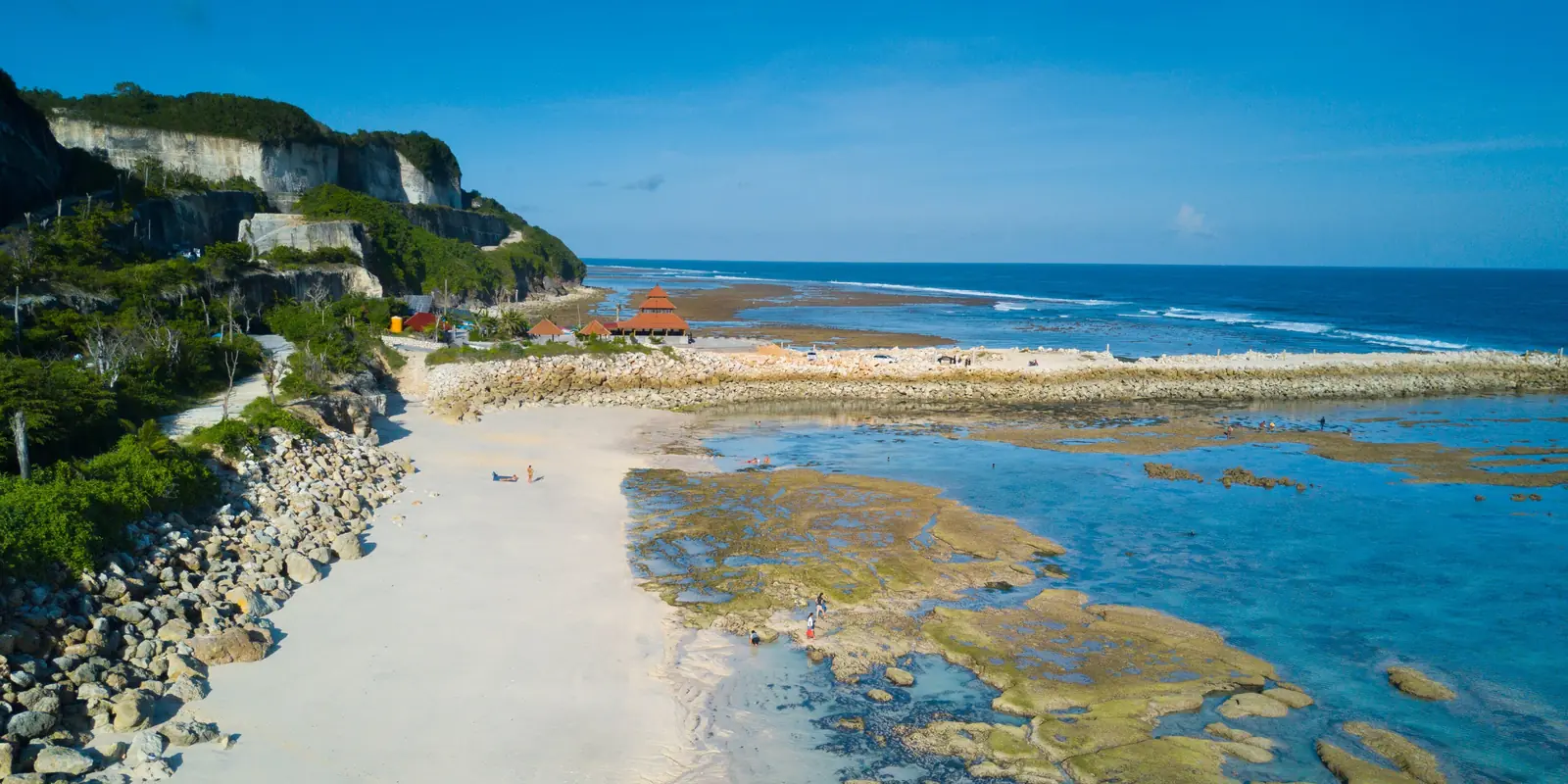
Where the chant came from
A chorus from a trance ritual
Shaped in the 1930s
During the 1930s Walter Spies, a painter and musician from Germany then living in Bali, worked with the dancer Wayan Limbak to turn the chant into a drama based on the Ramayana for Western audiences, and Limbak's touring groups made it known abroad. Balinese scholars point out that local performers were already developing the form.
A show for visitors, still evolving
Today the kecak is staged every evening at temples and on dedicated stages around Bali, by dancers from nearby villages paid from ticket sales. It has been performed mainly by men since its creation, and the first women's kecak group dates from 2006.
From the gate to the fire
The shape of a sunset at Melasti
Your ticket shows the start time. What follows is the shape of a visit, from the beach gate to the last flames, not a programme for your night.
- Gate
Pay for the beach
Pay the Melasti Beach entrance fee and parking at the gate. Neither is part of your ticket.
- Steps
Down to the show area
Show your voucher at the kecak entrance and take the stairs to the seating. Bring your passport or ID card.
- Bench
Claim a seat early
Seating is unnumbered, so early arrivals take the best spots. Apply repellent now, before dusk.
- Cak
The chorus takes the floor
The men sit in rings and begin the chant that gives the dance its name. There is no orchestra; every sound is a voice.
- Epic
The Ramayana unfolds
Dancers in costume act scenes from the epic inside the circle while the sky changes colour behind the cliffs.
- Flame
The fire scene
Fire closes the performance. Afterwards the whole audience leaves at once, into the dark, so have your ride arranged.
What your ticket covers
Included, extra and the fine print
The ticket in plain terms, so the gate and the stairs hold no surprises.
- Format
- A kecak and fire dance of about one hour on Melasti Beach in Ungasan, at sunset.
- Included
- Entry to the performance for your chosen date. The ticket is valid for that date only and for all nationalities.
- Paid at the gate
- The Melasti Beach entrance fee and parking for your car or scooter.
- Refunds
- None. The ticket cannot be cancelled, changed or refunded once confirmed, unlike most activities sold on GetYourGuide.
- Children
- Under-tens go free. Anyone aged ten or over needs a regular ticket.
- Access
- Wheelchairs and pushchairs can reach the venue, but stairs lead to the show area.
- Bring
- A passport or ID card, your voucher, insect repellent and a light for the walk out.
- Not included
- Transport, a guide, food and drinks. You make your own way to the beach and back.
Two kecak evenings
An hour on Melasti Beach, or a sunset evening at Uluwatu Temple
Melasti kecak ticket
Temple sunset tour
What it is
A seat at a beach kecak
Temple, kecak, optional dinner
How long
About one hour
About six hours
Getting there
Your own transport
Private car and driver
Food
Not included
Jimbaran dinner at your cost
If plans change
Non-refundable
Free cancellation up to 24 hours
Access
Stairs to the show area
Not wheelchair accessible
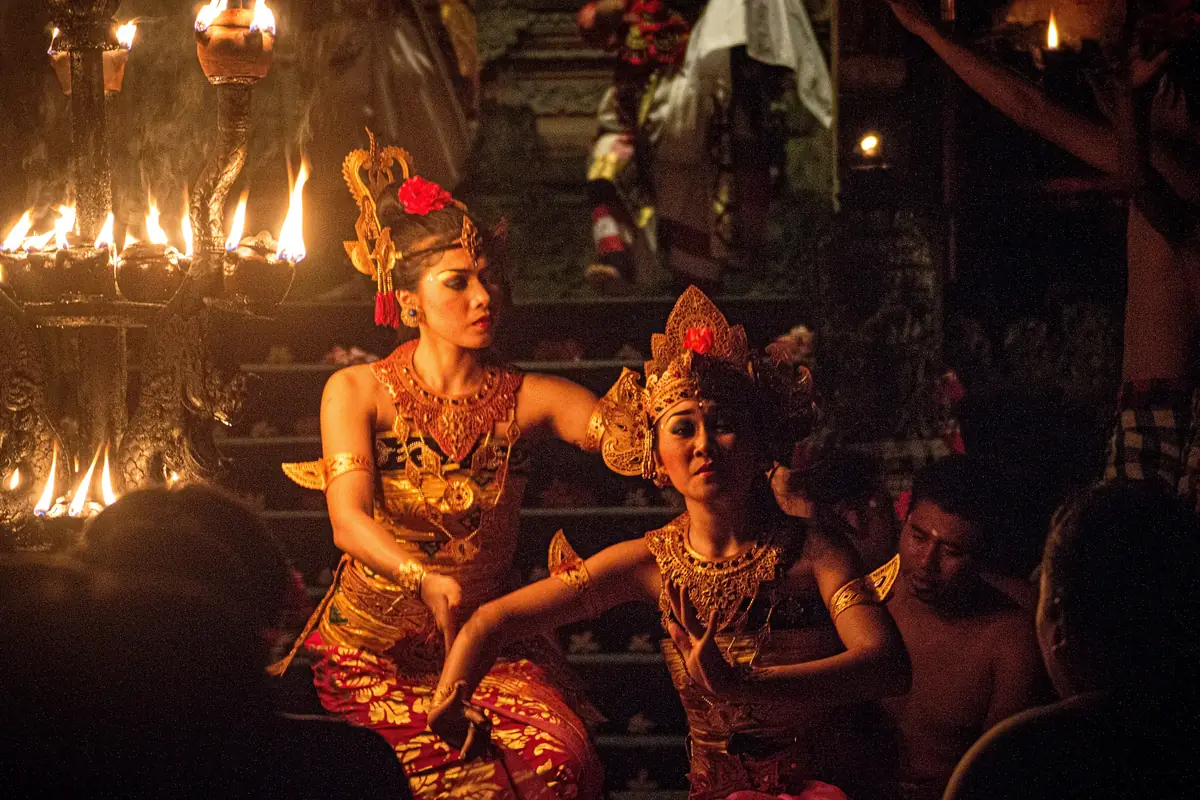
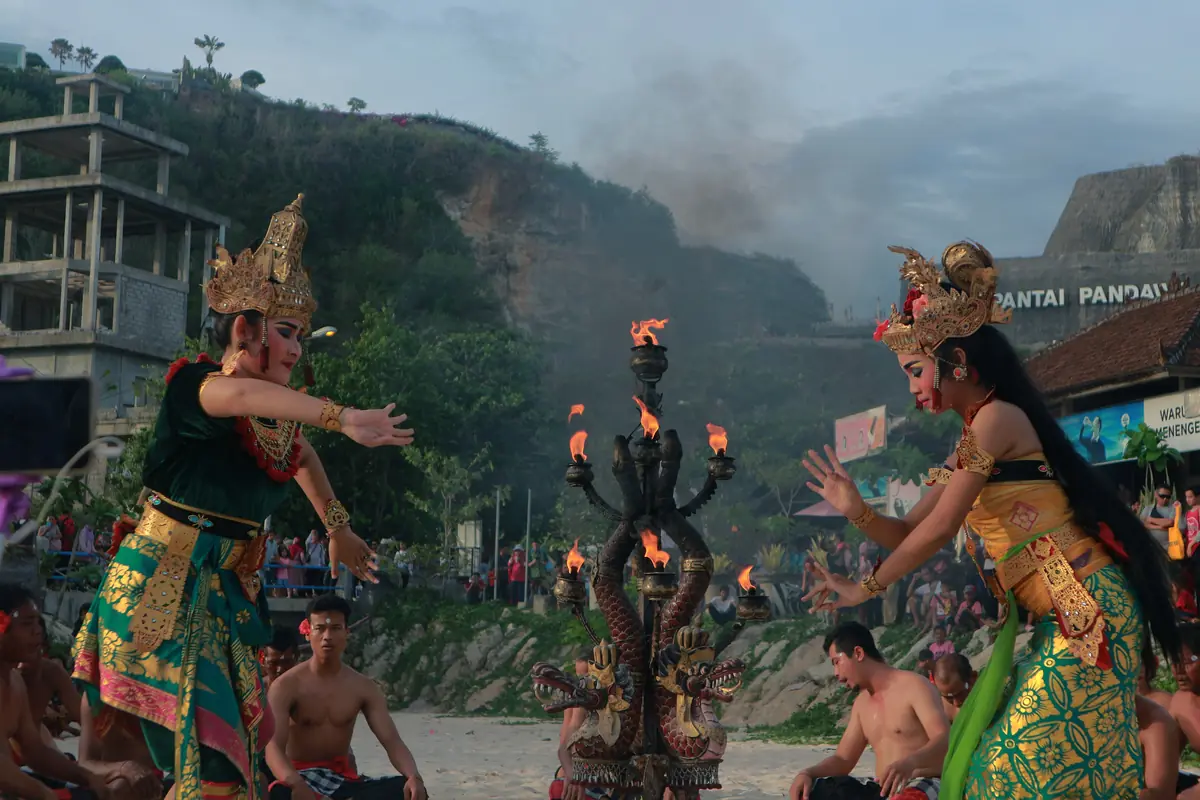
Cliffs, chorus and flame
The beach, the circle and the fire
Melasti Beach by day, and the kecak traditions the evening draws on, photographed at stages around Bali.
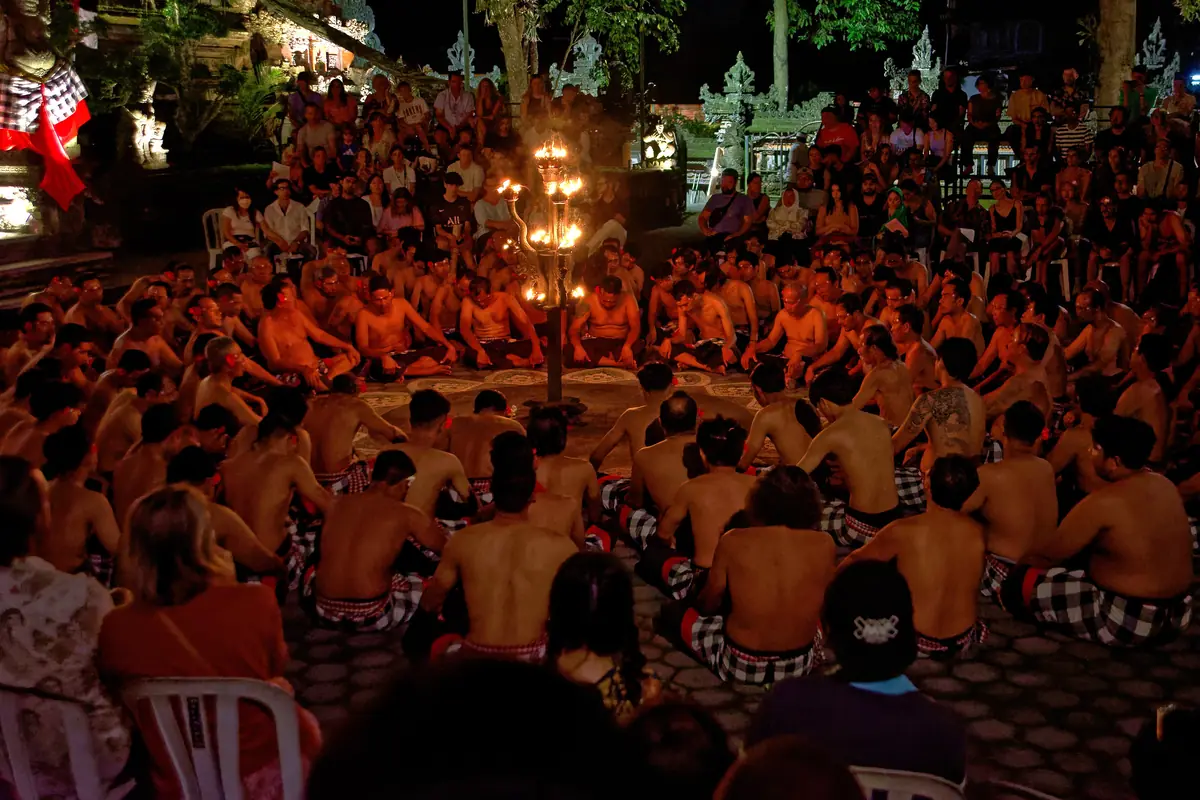
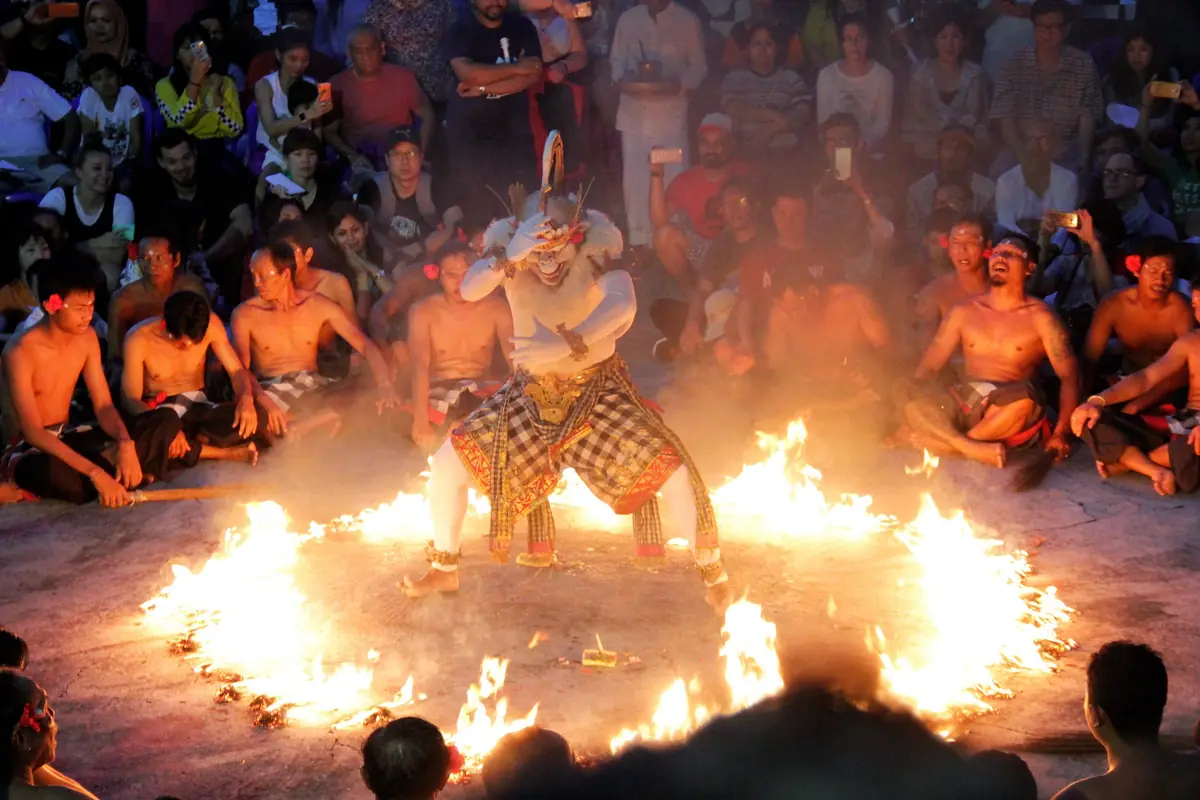
The ticket, and three ways to fill the afternoon
The Melasti kecak, a temple sunset tour, a surf lesson and a flight
The Melasti kecak is the evening. The temple tour is the alternative if you would rather be driven, and the surf lesson and paragliding flight keep you on the Bukit until the light goes.
Kecak and fire dance ticket on Melasti Beach
About an hour at sunset on Melasti Beach in Ungasan: the chanting chorus, scenes from the Ramayana and a fire scene. Entry ticket only; the beach fee and parking are paid at the gate, and the sale is final.
Uluwatu Temple at sunset, kecak and Jimbaran Bay
About six hours by private car with a driver: the clifftop temple at sunset and a kecak ticket, then the option of a seafood dinner on Jimbaran Bay at your own cost. Free cancellation up to 24 hours.
Beginner and intermediate surf lesson in Uluwatu
Two hours with a certified instructor at Balangan, Jimbaran or Dreamland beach, depending on the day's waves, with board, rash guard and photos for groups of two or more. Not for children under nine.
Tandem paragliding flight over Pandawa Beach
A three-hour outing with transfers and about fifteen minutes in the air with a certified pilot, over the cliffs and beaches of the southern coast. Booked per group of up to three; not for anyone afraid of heights.
More to book around Bali
Reaching the beach
Getting to Melasti and back
- Where it is
- Melasti Beach is in Ungasan, in the South Kuta district of Badung regency, on the Bukit Peninsula at the southern end of Bali.
- The Bukit
- The peninsula is a dry, stony limestone plateau, quite unlike the rice country further north, with small beaches tucked below its cliffs.
- By car or driver
- Head for Jalan Melasti in Ungasan from the Jimbaran or Uluwatu side. The paved road down to the beach winds and can be narrow.
- By scooter
- Parking at the gate covers motorbikes too. Remember you will ride back up the cliff road after dark.
- At the gate
- Pay the beach entrance fee and parking, then show your voucher at the kecak entrance and take the stairs down.
- Going home
- The show ends after dark and everyone leaves together. Agree your pickup before the show starts.
Read before you go
Six guides for a night on Melasti Beach
- Start here
Melasti kecak: worth it?
What the hour on Melasti Beach holds, what you pay at the gate, who it suits, and why the ticket cannot be cancelled or refunded once you book. Read it → - Compare
Melasti hour or Uluwatu night?
An hour of kecak on Melasti Beach, or six hours with a driver, Uluwatu Temple and an optional seafood dinner in Jimbaran. How the two evenings differ. Read it → - The story
The Ramayana in the circle
Rama in exile, the golden deer, Sita taken, Hanuman and the fire, the final battle: the episodes of the Ramayana a kecak is built from. Read it → - The history
Kecak, from trance to stage
How a chorus from a Balinese trance ritual became a Ramayana drama for visitors in the 1930s, and what the kecak is and is not today. Read it → - Getting there
Getting to Melasti Beach
Where Melasti Beach is on the Bukit Peninsula, how to reach it by car or scooter, what to pay at the gate, and how to plan the ride back after dark. Read it → - Around it
A Bukit afternoon, then kecak
Surf beaches, a paragliding flight, the beach itself and seafood in Jimbaran: how to fill a south Bali afternoon before the kecak on Melasti Beach. Read it →
FAQ
Before you book a seat on the sand
Is the Melasti Beach kecak worth it?
Yes, if you want an hour of kecak at sunset with the cliffs as a backdrop and can get there yourself. It is a performance for visitors, not a ceremony, and the ticket cannot be refunded, so book once your date is fixed.
Can I change my date or get my money back?
No. Once confirmed, the ticket is non-cancellable and non-refundable and cannot be moved to another date; the free cancellation most GetYourGuide activities carry is not offered here. It works only for the date you pick.
Is the beach entrance fee included?
No. The Melasti Beach entrance fee and parking are paid separately at the gate. The ticket covers the kecak and fire dance only.
How long does the show last?
About one hour. Your ticket shows the start time; come well before it, because the seating is unnumbered and fills up.
Do children need tickets?
Children under ten go free. Anyone aged ten or over needs a regular ticket.
Is it wheelchair accessible?
Partly. Wheelchairs and pushchairs can reach the venue, but stairs are needed to reach the show area itself.
What do I need to bring?
Insect repellent, your passport or an ID card, the ticket on a charged phone, money for the beach fee and parking, and a light for the way out; the mosquitoes arrive at dusk.
Is it the same show as the kecak at Uluwatu Temple?
No. The Uluwatu kecak is a separate performance by a different company beside the temple. Both tell scenes from the Ramayana with a chorus and fire.
Who is the seller?
Globaltix Indonesia, a ticket reseller, sells this ticket on GetYourGuide. Your voucher arrives through GetYourGuide, and questions about the booking go through the GetYourGuide app.
Is this the venue's own website?
No. Bali Kecak Fire Dance Guide is written independently for travellers. It is not the website of Melasti Beach, the dance company or the ticket seller, and it is not connected to any of them. Every booking is made with GetYourGuide.